In today’s digital landscape, protecting sensitive information and securing access to systems has become more critical than ever. Traditional password-based authentication methods are increasingly vulnerable to breaches, phishing attacks, and unauthorized access. Organizations and individuals are turning to biometric authentication as a more secure, convenient, and reliable solution. USB-based fingerprint devices have emerged as the most accessible and effective way to implement biometric security across various applications.
USB Finger Print Reader: The Future of Secure Authentication
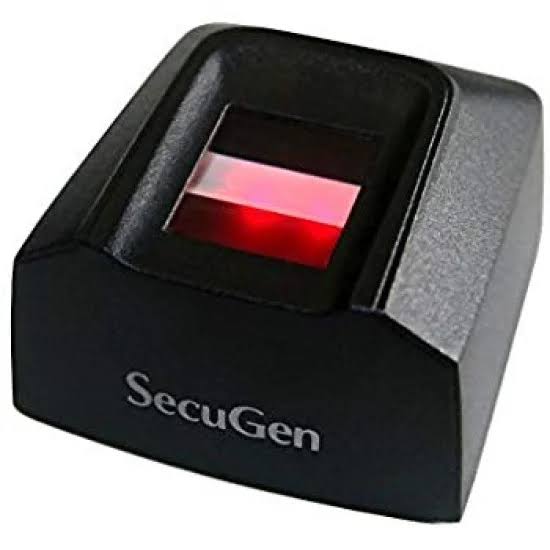
A USB finger print reader represents a significant leap forward in personal and organizational security. These compact devices connect directly to computers or terminals via USB ports, offering immediate biometric authentication without requiring complex installation or dedicated infrastructure.
USB fingerprint readers work by capturing the unique patterns of an individual’s fingerprint and converting them into encrypted digital templates. When authentication is needed, the device compares the presented fingerprint against stored templates, granting access only when a match is confirmed. This process takes mere seconds, making it faster and more convenient than traditional password entry.
The benefits of implementing USB fingerprint readers extend far beyond basic security. They eliminate the need to remember multiple complex passwords, reduce the risk of credential sharing among employees, provide detailed audit trails of access attempts, and significantly decrease password-related helpdesk tickets. For businesses, this translates to enhanced security posture while reducing operational costs.
Modern USB fingerprint readers support various applications including Windows login, application-level security, document encryption, and time attendance systems. Their plug-and-play nature means deployment is straightforward, making biometric security accessible even for small businesses and individual users.
USB Finger Print Scanner: Precision and Reliability Combined
While readers focus on authentication, USB finger print scanners emphasize high-quality image capture and verification capabilities. These devices employ advanced optical or capacitive sensors that capture fingerprint images at resolutions of 500 DPI or higher, ensuring accurate biometric data collection.
High-quality USB fingerprint scanners incorporate several sophisticated features. They include live finger detection to prevent spoofing with fake fingerprints, automatic finger positioning guidance for optimal capture, and multi-spectral imaging that works even with wet, dry, or damaged fingers. These capabilities make scanners ideal for demanding environments where reliability is paramount.
Industries such as banking, healthcare, government, and education rely on USB fingerprint scanners for identity verification, secure document signing, patient identification, and access control. The scanners integrate seamlessly with existing software systems through standard APIs and SDKs, enabling custom security solutions tailored to specific organizational needs.
The Next Gen Technologies (thenextgentechnologies.com) has established itself as a top company in providing enterprise-grade USB fingerprint scanners, offering devices that meet international security standards while delivering exceptional performance and durability.
USB Biometric Device: Comprehensive Security Solutions
The term USB biometric device encompasses a broader range of authentication technologies beyond fingerprints, including facial recognition and iris scanning devices, all leveraging USB connectivity for universal compatibility. However, fingerprint-based devices remain the most widely adopted due to their optimal balance of security, cost, and user acceptance.
USB biometric devices serve multiple purposes across different sectors. In corporate environments, they secure workstation access and protect confidential data. Healthcare facilities use them for accurate patient identification and medication administration verification. Financial institutions deploy them for secure transactions and customer authentication. Educational institutions leverage them for campus access control and exam verification.
What makes USB biometric devices particularly attractive is their scalability. Whether deploying a single device for personal use or thousands across an enterprise, the technology adapts seamlessly. Cloud-based identity management platforms now support USB biometric devices, enabling centralized administration and monitoring across distributed locations.
The Next Gen Technologies provides comprehensive USB biometric device solutions, including hardware supply, software integration support, and ongoing technical assistance, ensuring organizations can confidently implement biometric security regardless of their technical expertise.
Conclusion
USB biometric authentication devices represent the ideal convergence of security, convenience, and affordability. As cyber threats continue to evolve, relying solely on passwords is no longer adequate. By implementing USB fingerprint readers, scanners, and biometric devices from trusted providers like The Next Gen Technologies, organizations can significantly strengthen their security posture while improving user experience and operational efficiency.
Frequently Asked Questions (FAQs)
1. What is the difference between a USB fingerprint reader and a USB fingerprint scanner?
While the terms are often used interchangeably, there are subtle distinctions. A USB fingerprint reader typically refers to devices primarily designed for authentication purposes—verifying identity for system access. A USB fingerprint scanner emphasizes high-quality image capture and is often used for enrollment, verification, and identification in more demanding applications. Scanners generally feature higher resolution sensors and more advanced image processing. However, many modern devices function as both readers and scanners, providing comprehensive biometric capabilities.
2. How secure are USB biometric devices against hacking or spoofing?
Modern USB biometric devices incorporate multiple security layers to prevent hacking and spoofing. They use encrypted communication between device and computer, store fingerprint templates as irreversible mathematical representations (not actual images), and employ live finger detection technology to identify fake fingerprints made from silicone, gelatin, or photos. Quality devices from reputable providers like The Next Gen Technologies meet international security standards (such as FBI PIV and FIDO2 certification) and have extremely low false acceptance rates, typically under 0.001%, making unauthorized access virtually impossible.
3. Can multiple users register their fingerprints on one USB biometric device?
Yes, most USB biometric devices support multiple user enrollments. The number varies by device and application. Standalone devices typically store 1-10 user templates locally. However, when connected to computer-based systems or enterprise identity management platforms, virtually unlimited users can be enrolled, with their biometric templates stored in secure databases. Each user can typically register multiple fingers (usually up to 10) as backup options. This flexibility makes USB biometric devices suitable for both personal and multi-user environments.
4. What happens if the USB biometric device fails or is unavailable?
Quality biometric security implementations always include fallback authentication methods. Most systems allow configuring alternative authentication like PIN codes, smart cards, or backup passwords that can be used if the biometric device fails or is unavailable. For critical applications, organizations often maintain spare USB biometric devices. Additionally, enterprise systems can be configured to allow temporary access through supervisor override or time-limited guest credentials, ensuring business continuity while maintaining security protocols.
5. Are USB biometric devices compatible with all operating systems and applications?
USB biometric devices generally support major operating systems including Windows (7/8/10/11), various Linux distributions, and macOS, though compatibility varies by manufacturer and model. For application integration, most devices come with Software Development Kits (SDKs) that allow developers to integrate biometric authentication into custom applications. Many devices support industry standards like FIDO2, WebAuthn, and Windows Hello, enabling passwordless authentication across numerous platforms and services. The Next Gen Technologies provides detailed compatibility information and technical support to ensure seamless integration with your existing infrastructure.