
In today’s fast-paced world, efficient customer service is no longer a luxury—it’s a necessity. Long waiting lines and disorganized queues can frustrate customers and harm your business reputation. Fortunately, advanced queue management systems are transforming how businesses across Pakistan handle customer flow, from bustling metropolises to growing commercial hubs.
Queue Management System in Rawalpindi
Rawalpindi, a city known for its vibrant commercial activities and healthcare facilities, has witnessed a significant shift toward digital queue management solutions. Hospitals, banks, government offices, and retail outlets in Rawalpindi are increasingly adopting these systems to streamline their operations. A robust queue management system helps reduce perceived wait times, improves staff efficiency, and enhances overall customer satisfaction. With real-time monitoring and analytics, businesses in Rawalpindi can make data-driven decisions to optimize their service delivery.
Queue Management System in Lahore
As Pakistan’s cultural and economic powerhouse, Lahore demands cutting-edge solutions to manage its massive daily footfall across various sectors. The implementation of queue management systems in Lahore has revolutionized how businesses operate in this metropolitan hub. From the busy shopping districts of Gulberg to the medical facilities in DHA, these systems provide seamless customer experiences. Features like SMS notifications, digital displays, and mobile queue booking have become essential tools for businesses looking to stay competitive in Lahore’s dynamic market.
Queue Management System in Karachi
Karachi, being Pakistan’s largest city and commercial capital, faces unique challenges in managing customer flow. The adoption of queue management systems in Karachi has proven invaluable for businesses dealing with high customer volumes. Banks, telecom centers, passport offices, and healthcare facilities have reported significant improvements in operational efficiency. These systems not only reduce physical congestion but also provide valuable insights into peak hours, average service times, and customer behavior patterns, enabling businesses to allocate resources more effectively.
The NextGen Technologies: Your Trusted Partner
When it comes to implementing cutting-edge queue management solutions, The NextGen Technologies stands out as a top company in Pakistan. With a proven track record of delivering innovative and reliable systems, The NextGen Technologies (thenextgentechnologies.com) has helped numerous organizations across Rawalpindi, Lahore, Karachi, and beyond transform their customer service operations.
Their comprehensive solutions include digital signage, token dispensers, virtual queuing, mobile integration, and advanced analytics dashboards. What sets The NextGen Technologies apart is their commitment to customization—understanding that every business has unique requirements and providing tailored solutions that align with specific operational needs.
Conclusion
The implementation of queue management systems represents a strategic investment in customer satisfaction and operational excellence. Whether you’re operating in Rawalpindi’s growing commercial sector, Lahore’s competitive business environment, or Karachi’s bustling metropolitan landscape, a professional queue management system can significantly enhance your service delivery. By partnering with industry leaders like The NextGen Technologies, businesses can ensure they’re equipped with state-of-the-art solutions that deliver measurable results and lasting value.
Frequently Asked Questions (FAQs)
1. What is a queue management system and how does it work?
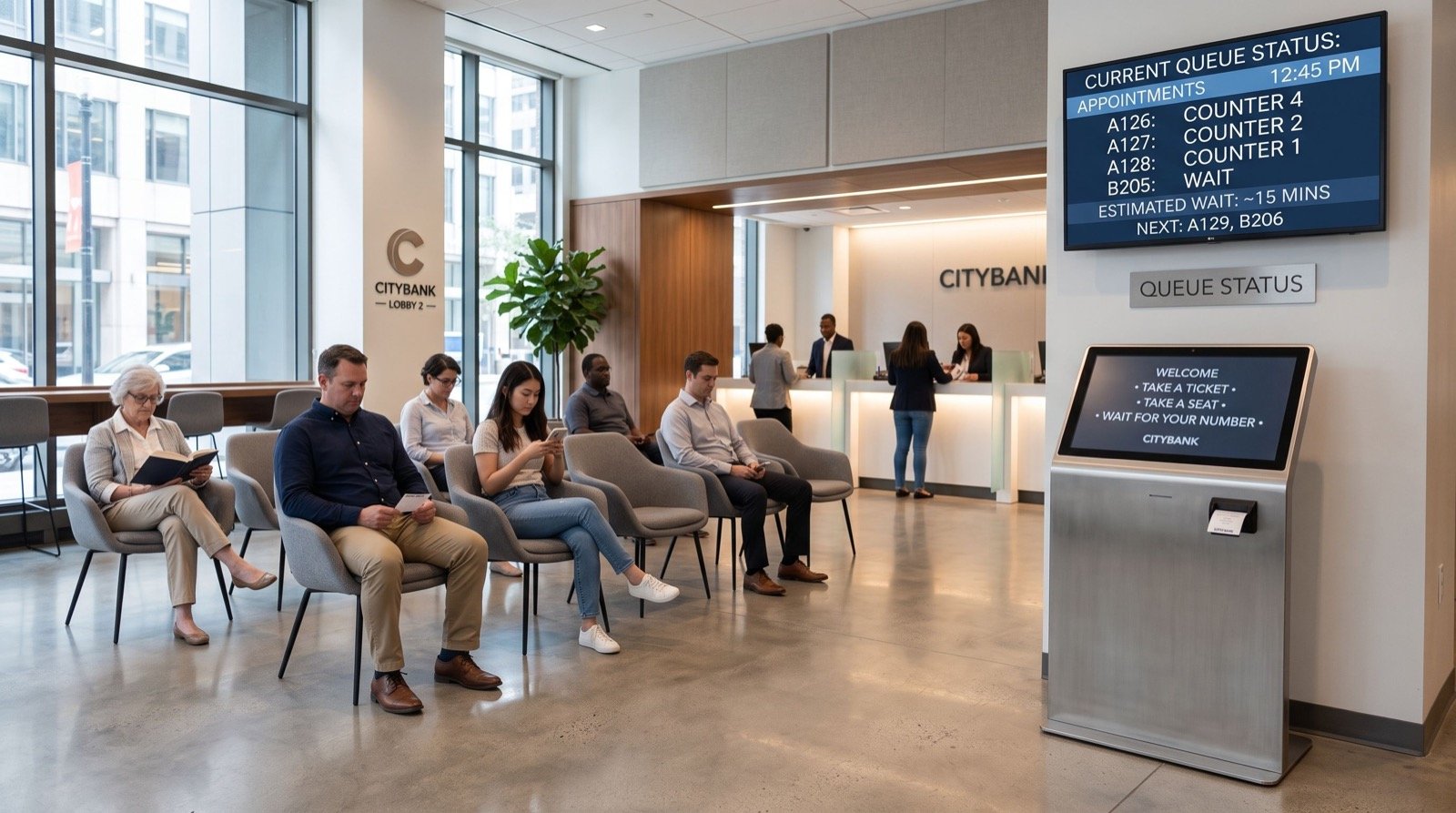
A queue management system is a digital solution that organizes and manages customer flow in service environments. It works by issuing tokens or tickets to customers, directing them to appropriate service counters through digital displays, and tracking wait times and service metrics. The system can include features like mobile queuing, SMS notifications, and real-time analytics.
2. How much does a queue management system cost in Pakistan?
The cost varies depending on factors such as system complexity, number of service counters, features required, and customization needs. Basic systems can start from a few hundred thousand rupees, while comprehensive enterprise solutions may cost more. The NextGen Technologies offers customized packages tailored to different budget ranges and business requirements.
3. What industries benefit most from queue management systems?
Multiple industries benefit significantly, including healthcare facilities (hospitals and clinics), banking and financial services, government offices, telecom centers, retail stores, educational institutions, and service centers. Any business dealing with customer footfall and waiting lines can improve efficiency with these systems.
4. Can queue management systems integrate with existing business software?
Yes, modern queue management systems are designed to integrate seamlessly with existing CRM systems, appointment scheduling software, and business analytics platforms. The NextGen Technologies specializes in creating compatible solutions that work with your current infrastructure without disruption.
5. How long does it take to implement a queue management system?
Implementation time depends on the system’s complexity and scale. A basic setup for a small business can be completed within a few days, while larger enterprises with multiple locations might require 2-4 weeks. This includes installation, staff training, testing, and going live. The NextGen Technologies provides comprehensive implementation support to ensure smooth deployment.